How to Mix Pattern Like a Pro
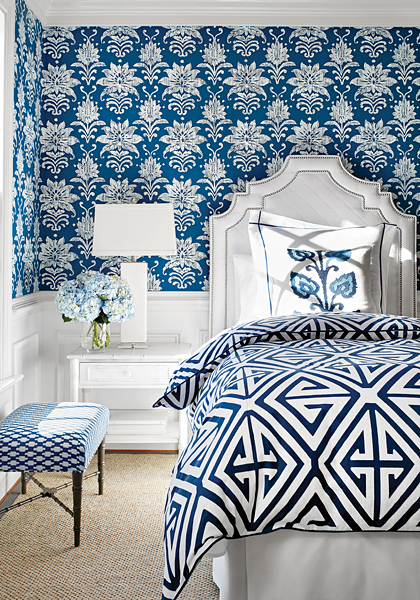
The do’s and don’ts for mixing patterns is one of the design dilemmas we get asked about the most while working with clients. Using multiple patterns in a room can be intimidating, but it’s easy to do once you know a few tricks and one simple formula.
The Formula
As a rule of thumb, mixing three (or more) patterns is a good place to start. It’s enough to create visual interest, but not too overwhelming. Yet, multiple versions of the same style of pattern, when layered together, confuse the eye. Varying the type of pattern, on the other hand, creates clear contrast and visual interest. So what’s the right variety of patterns? Use our easy formula of three to create in the right mix for any room:
Organic Print + Geometric + Small Scale Repeat
An organic pattern can be anything with fluid movement, from a floral pattern, or something inspired by nature, to an abstract print.
A geometric print has a structured pattern with a clear repeat, such as a plaid, stripe, greek key or chevron.
A small scale repeat features a small, repetitive pattern, like a polka dot, tweed, herringbone, animal print, or small stripes.
Start with the pattern style you gravitate towards most. If you prefer geometrics, for example, find a geometric pattern you love, then move on to coordinating it with something organic and a small scale repeat. The idea is to start with what you love and build your grouping from there
Vary the Scale
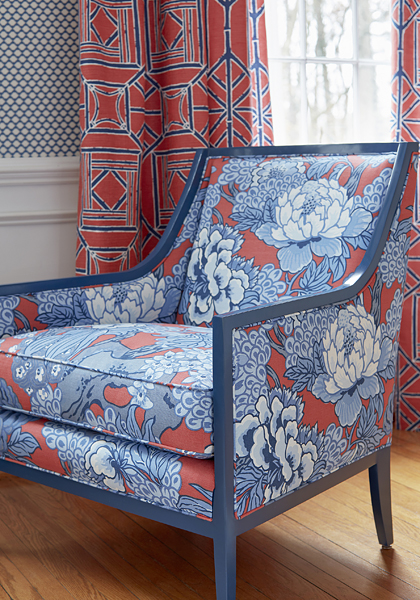
Layering too many small patterns together looks busy, while multiple large scale prints compete for focus. The key is to vary the scales of the patterns you’re using. In a grouping of three, choose one large pattern and one medium pattern to balance your small scale repeat.
Coordinate with Color
Color is the tool that will tie your different patterns together for a cohesive look. Identify a clear color scheme for your space, and concentrate on choosing prints that fall into this palette. Keep in mind that when playing with pattern, it’s helpful to use colors that have the same hue and intensity. In a room with many contrasting elements, this consistent level of color intensity can help create a polished look.
Think Beyond Fabric
Pattern crosses over many mediums. It can be found in the natural grain of wood, marble veining and eglomise glass, for example. We often use other decorative touches, such as nailhead trim on upholstery and artwork, to bring pattern into a space.